Mister FC Utrecht, a Beloved Late Bloomer
July 9, 2026 · Raúl López
Leo van Veen, known as 'Mister FC Utrecht', passed away at eighty, leaving behind a legacy as a key player and cherished figure in football history.
Mister FC Utrecht, a Beloved Late Bloomer
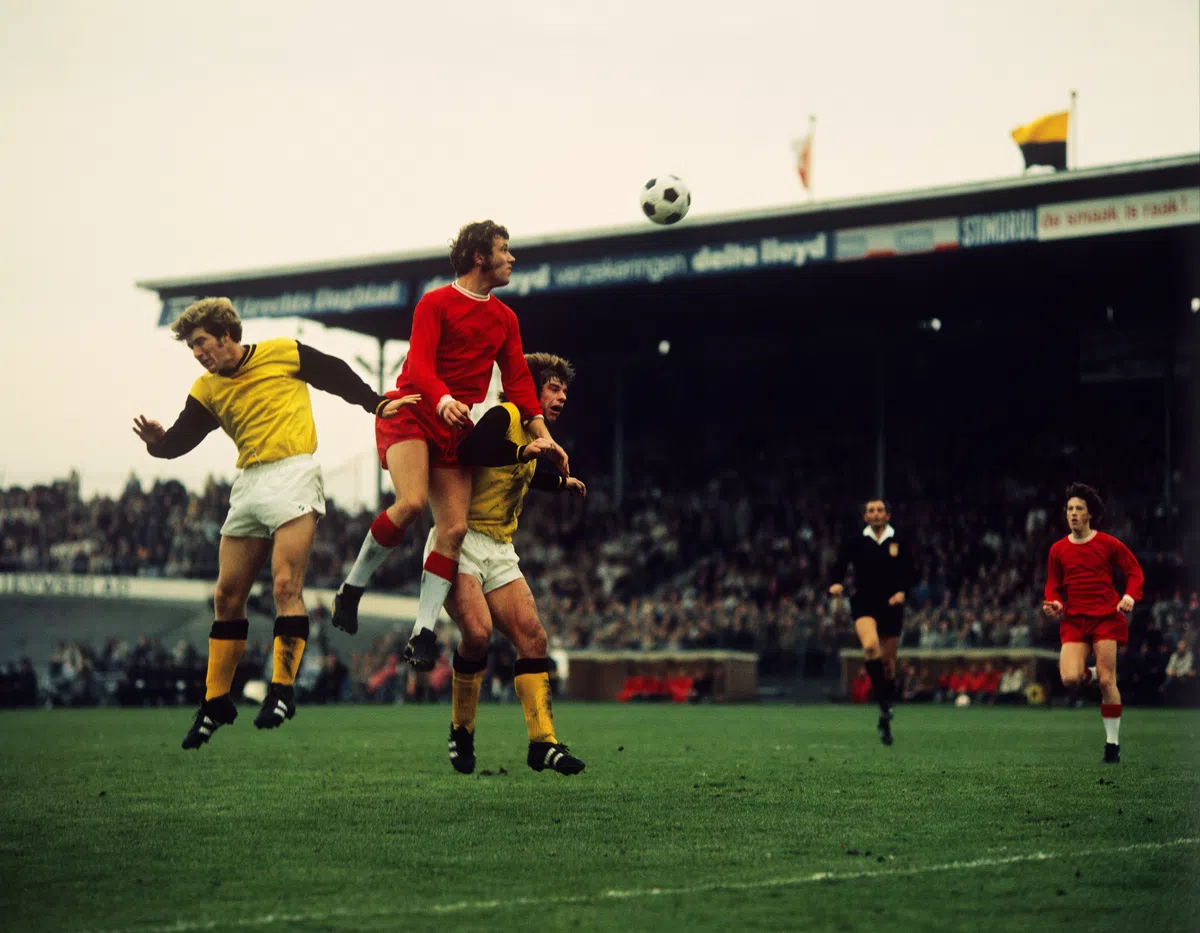
Utrecht has witnessed many idols, but few have resonated as deeply with the fans as Leo van Veen. He followed in the footsteps of local star Tonny van der Linden at DOS and seemingly set unbreakable records at FC Utrecht. On Wednesday, ‘Mister FC Utrecht’ passed away at the age of eighty due to complications from dementia.The cause of his death is almost naturally linked to his qualities as a forward. Leo van Veen was not the fastest striker of his generation, but he combined great tactical insight and fine technique with a knack for scoring goals, many of which came from his hundreds of aerial duels. During the 1970s, the atmosphere at FC Utrecht was intense, especially with the fans on the Bunnikside rallying behind the club during home matches. For them, Van Veen was one of the great heroes.
A late bloomer, Van Veen remained a professional footballer until he was forty. It took seven years for him to make a significant impact in the Eredivisie after his debut at FC Utrecht. By the age of 25, he finally secured a starting position and began converting his abilities into goals. Ultimately, he scored more goals than anyone else at De Galgenwaard, with 154 goals in the Eredivisie, a record that may stand forever for FC Utrecht. Following him are John van Loen and Dirk Kuijt, who scored only 51 league goals, a considerable gap.
Earlier in his career, Van Veen also scored twenty times for DOS, the club close to his heart. His family was rooted in the club; his father, Co, played there in the 1950s. The Van Veen household, comprised of four children, is authentically Utrecht; their home is situated near Oudwijk and Sterrenwijk. Leo was only nine when his father unexpectedly passed away from an infection. He found solace in the Catholic neighborhood association De Pioniers and in watching DOS, which he saw become Dutch champions in 1958 at the age of twelve. His great idol was, of course, Tonny van der Linden—top scorer, international player, and beloved figure.
Van Veen initially played for Celeritudo (‘where cows roamed the pitch during the week’) and was also active in volleyball, which helped him develop the jump strength that would later earn him numerous goals. He grew up alongside Eddy Achterberg, and it was a great gift for the family when he was accepted as a youth member after signing up for the DOS football day at the age of 15. It would be over four years before he made his Eredivisie debut against FC Twente on November 28, 1965.
The night before his first match, he rode his bike to De Galgenwaard to inspect the pitch. A neighborhood officer spotted him climbing over the fence and questioned him; however, Van Veen’s excuse—that he was about to play there for the first time—was credible. The 1.92-meter tall forward joined a distinctly Utrecht team alongside Van der Linden and Achterberg, as well as Ed van Stijn, Cees Loffeld, and Henk Wery. Unfortunately, he soon found himself in military service.
Due to his obligations with the Royal Marechaussee, Van Veen had little time for training and playing for nearly two years. His real breakthrough came in September 1967 when he scored in the Inter-Cities Fairs Cup against Real Zaragoza (3-2). From that moment on, he thrived, netting five goals in his first five matches, benefitting from Van der Linden’s retirement.
Despite the romantic notion of football, the reality was often tough, as DOS battled relegation each season. Yet, they managed to stay afloat, albeit narrowly. A joke circulated in Utrecht that DOS could not even manage to be relegated. Van Veen played a crucial role in the survival fight of 1970, where DOS faced a decisive match against GVAV in Groningen. His calm demeanor before the game stood out, as the team spent the night in the Drenthe village of Norg, which was hosting a fair that weekend. DOS players made the most of it and enjoyed the festivities. Van Veen later recalled, “The next day we were very relaxed. The GVAV players were quite tense. I thought: ‘Well, we’re ahead 1-0 already.’ These prophetic words came true as Van Veen scored the decisive goal, ensuring DOS's survival and thus the future of professional football in Utrecht.
Earlier, the city council had secretly been working on a rescue plan that would only be implemented if the city had a club competing at the highest level. This led to the creation of FC Utrecht, formed from the merger of DOS, Velox, and Elinkwijk. The new club donned the red and white colors of the Domstadt and immediately ushered in a new era, aided by the young coaching duo Bert Jacobs and Fritz Korbach, who built a strong team spirit.
As Van Veen found his rhythm in his second season, the goals flowed. He initially formed a strong partnership with Joop van Maurik, known for his tenacity. At 27, Van Veen reached a personal peak during an away match against NAC, scoring all four goals in a 4-2 victory. Despite his age, this felt like a breakthrough, highlighting his versatility; he was more than just a classic target man in the box.
Image
In seven consecutive seasons, Van Veen missed only five games, scoring 14, 14, 21, 9, 12, 17, and 13 goals. He became an emblematic figure for the club, even making it to the preliminary selection for the Dutch national team ahead of the 1978 World Cup. FC Utrecht proved to be the most successful merger club in the Netherlands, being the only one of its kind to never be relegated from the Eredivisie. In the early 1980s, Utrecht achieved top rankings with fifth and even third places (in 1981).
During this period, Van Veen was absent from team photos due to a lucrative deal with the club. In the summers of 1979 and 1980, FC Utrecht loaned him to the Los Angeles Aztecs, competing in the North American Soccer League, where he played under Rinus Michels and alongside Johan Cruyff. The aim was to promote professional football in the United States, but the financial rewards were also quite attractive. Thus, in his thirties, Van Veen experienced some of his best years.
A new pinnacle was his transfer to Ajax in the summer of 1982, following Cruyff’s return to the club. Ajax’s management sought to bring Van Veen in as a libero. At that time, he was 36, a year older than both coach Aad de Mos and Cruyff himself. Van Veen bid farewell to the Utrecht fans during a friendly match against Southampton, invited to celebrate the opening of the new stadium, Nieuw Galgenwaard. The prospects in Amsterdam looked bright for him, signing a four-year contract, with the last two years as a youth coach. However, the adventure did not turn out as expected. Despite Ajax winning the double under Cruyff, Van Veen found that he no longer possessed the mobility required to play in a side that primarily operated in the opponent's half. He returned to FC Utrecht, where he became a mentor for a generation of young talents from the city.
Among those who broke through during this time were Jan Wouters, Mark Verkuyl, Gert Kruys, Frans Adelaar, Edwin Godee, Robbie de Wit, and John van Loen. The young players were impressed by the humble, calm, and friendly way in which Mister FC Utrecht interacted with them. These qualities made him immensely popular.
Later in his career, Van Veen decided to join the newly professional club RKC in the first division, which gained recognition for its ambitious goals and extensive under-the-table dealings. For Van Veen, RKC became a new love, a second home. He played there for two seasons before retiring at the age of forty, concluding a professional career that spanned 607 matches across various levels.
In the ten years that followed, Van Veen built a close relationship with RKC, starting his coaching career there in 1986. Despite lacking experience, he led the former amateur club to the Eredivisie within two years. With prominent players like Stanley Brard, Peter Bosz, Marcel Brands, Cees Schapendonk, and Ad van der Wiel, RKC won all its home matches during the 1987/88 championship season, many by significant margins. The highlight was a 7-2 away victory against their new rivals NAC. This established Van Veen’s name as a coach. He was a true practitioner, a street-smart footballer who could always find the right words to connect with his players.
After the promotion, Van Veen chose to leave for the ambitious VVV, which had finished fifth in the Eredivisie for two consecutive seasons. However, he struggled to bond with the environment there. In February 1989, he was dismissed, and VVV subsequently failed to avoid relegation. Following his departure from RKC with new coach Ger Blok, Van Veen returned a year later, and between 1989 and 1993, the club became a stable mid-table team, occasionally flirting with the top tier.
This period was tumultuous, with RKC marking its 50th anniversary and facing scrutiny due to under-the-table dealings. However, Van Veen remained unfazed; he was content that he could extend his contract after two years. A bizarre highlight during his second season was a 6-6 draw against FC Twente after being down 0-3 at halftime and leading 5-3 twenty minutes before the end. The endearing and tactically astute Van Veen won the affection of the fans, ensuring the club's comfortable existence in the Eredivisie. For four years, RKC never faced relegation threats, and in his final season, the team even triumphed 3-0 against reigning champions PSV.
A year after his departure, RKC barely managed to remain in the league through relegation playoffs. Following his second exit from Waalwijk, Van Veen did not remain jobless for long. In September 1993, he was called back to FC Utrecht, as the collaboration with coach Ab Fafié had ended prematurely. However, Van Veen too had to leave in his second season, resulting in another return to Waalwijk. His final match as RKC manager took place on June 5, 1996, against Fortuna Sittard in their old stadium, coinciding with his fiftieth birthday. Afterward, his coaching career gradually faded. He had brief contracts with Go Ahead Eagles and HFC Haarlem, plus an adventure with Ajax Cape Town, before focusing more on scouting and working briefly for Al Sadd in Qatar and serving as technical manager at AC Trenčín in Slovakia.
In recent years, Van Veen increasingly battled Alzheimer’s disease, which ultimately led to his passing on Wednesday.
Related Articles
- Schreuder orgoglioso dopo aver vinto il Rinus Michels Award: 'Perché
- NEC kumbinsido kay Emre Mor; dalawang-taong kontrata nakahanda
Read more on our latest coverage and stay tuned for updates on what happens next.
TAGS
Related Stories
Ruben Amorim Aims to Lead Milan to Scudetto Glory With Star Players
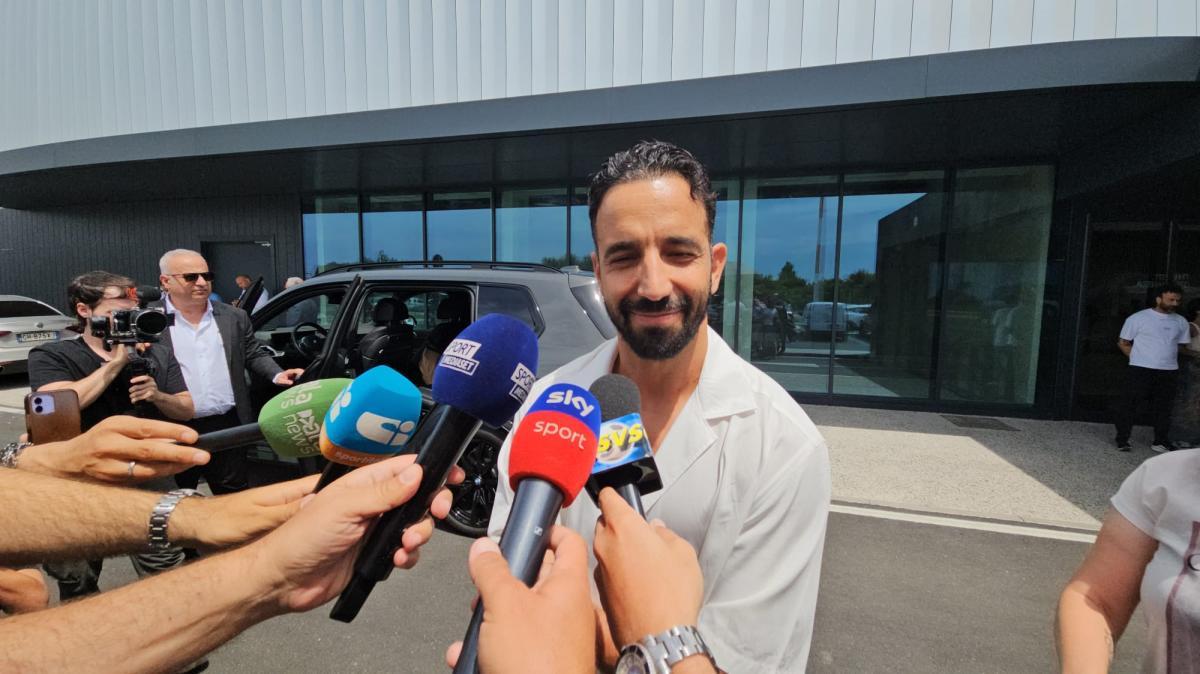
Ruben Amorim, the new coach of AC Milan, aims for the Scudetto and is focused on retaining key players like Modric and integrating new signings like Goncalo Ramos and Leao.
9m ago · Adriana Ruiz

Rafael Márquez Appointed Mexico's New Head Coach
Rafael Márquez takes over as Mexico's national team coach, replacing Javier Aguirre. Márquez, a former international, has signed on until the 2030 World Cup.
25m ago · Antonio Ríos
Nani Advocates for Ronaldo's Role in Portugal Squad
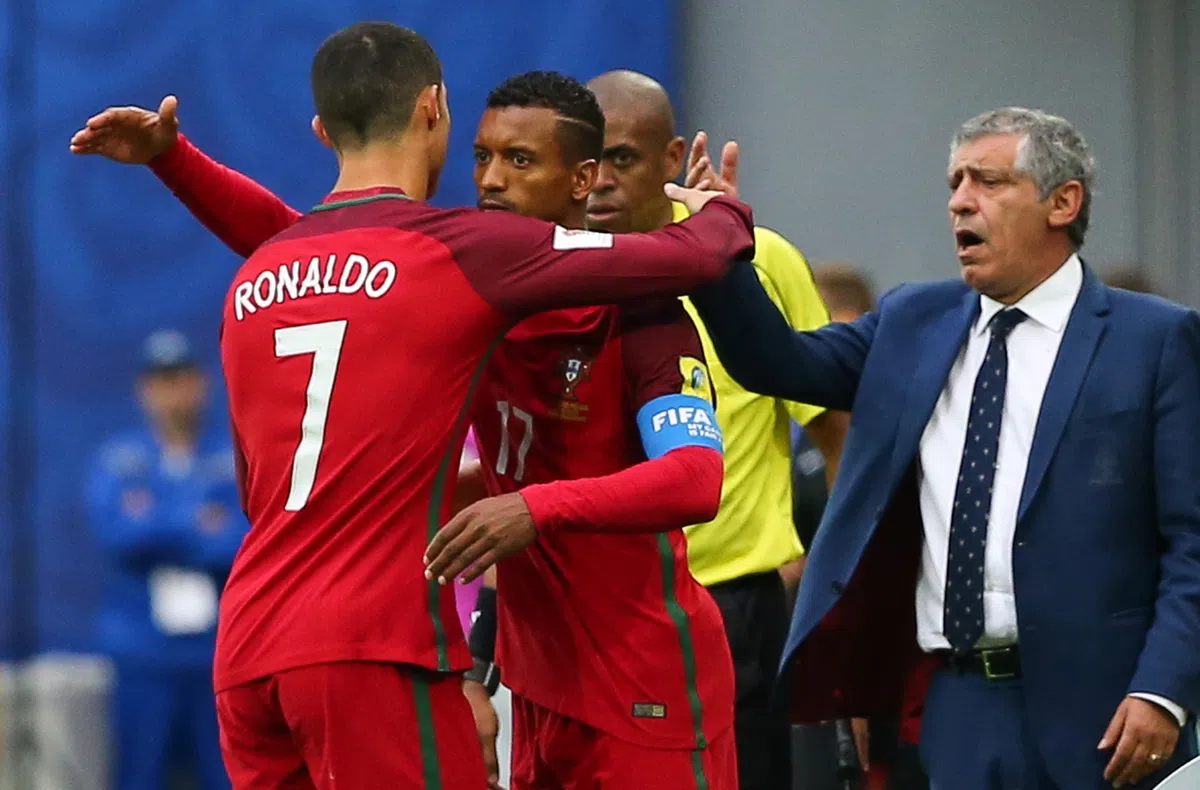
Nani defends Cristiano Ronaldo's role in the Portuguese national team, insisting he should always be in the starting lineup and that teammates must adapt to him, despite criticism regarding his defensive contributions.
3h ago · Cristina Jiménez