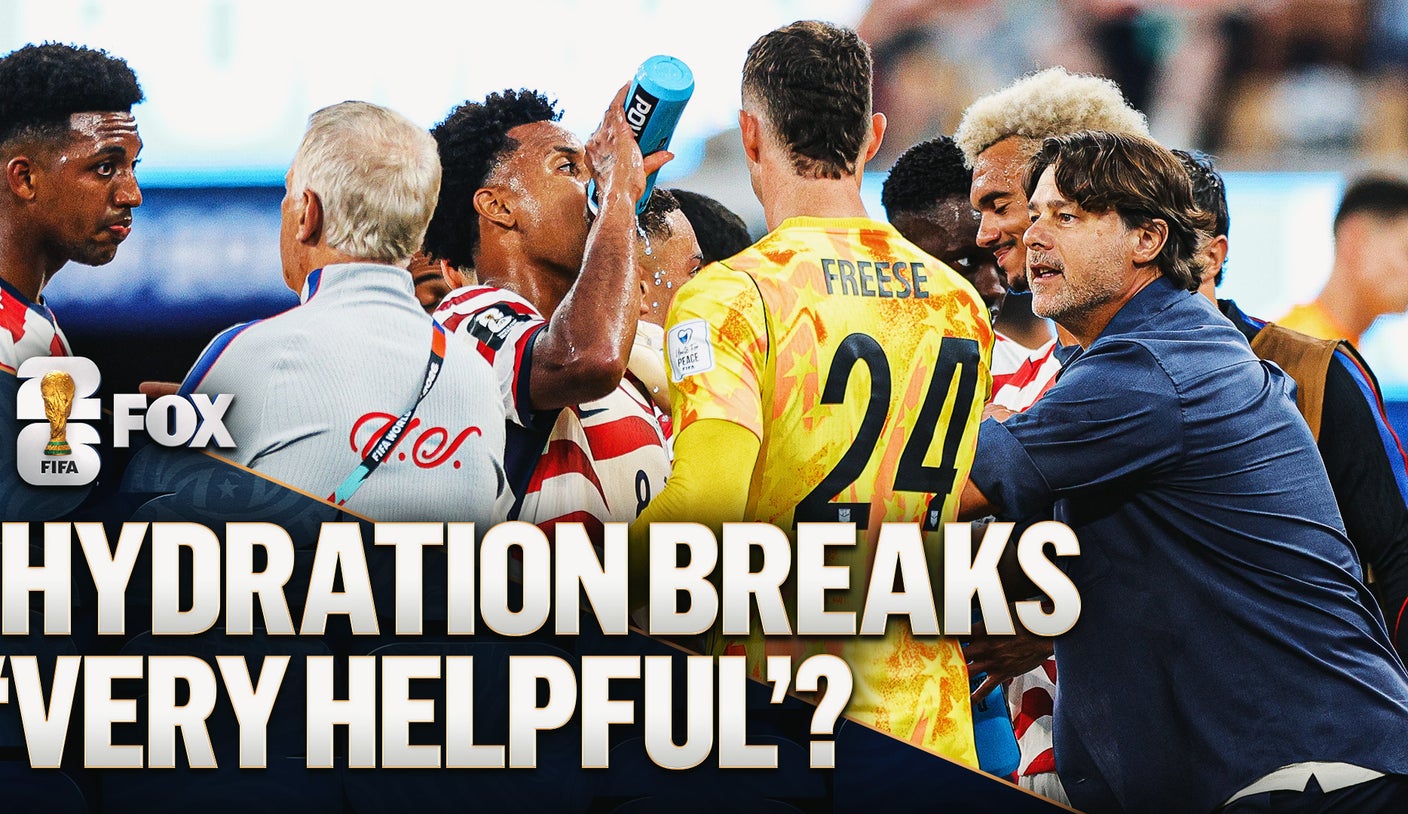
USA Adjusts to World Cup Hydration Breaks Amid Debate
June 24, 2026 · Luis García
The USA men's national team is adjusting to new hydration breaks introduced in the 2026 FIFA World Cup, with mixed feelings among players and coaches about their necessity.
U.S. World Cup Training Base (Irvine, Calif.) — One of the major storylines entering the 2026 FIFA World Cup has been the implementation of mandatory hydration breaks. Instead of playing two uninterrupted 45-minute halves, FIFA has introduced a brief three-minute cooling period midway through each half, effectively splitting matches into quarters. This measure aims to protect players from extreme summer heat, with temperatures in some host cities expected to exceed 100 degrees Fahrenheit. While many World Cup venues are equipped with roofs and climate-control features to mitigate those conditions, the topic has sparked significant debate. Some players and coaches feel that water breaks are unnecessary in enclosed stadiums where conditions are more manageable, although they acknowledge the need in open-air venues.
The U.S. men’s national team has won its first two World Cup matches against Paraguay and Australia, securing first place in Group D. They will face Türkiye on Thursday in Los Angeles, but the outcome will not affect their advancement to the round of 32 on July 1 in Santa Clara, California. The USA's first match at Los Angeles Stadium was mostly enclosed with an evening kickoff, while the Seattle Stadium hosted the midday game.
Despite the ongoing discussions, players have expressed indifference towards the hydration breaks. "I’m pretty indifferent towards it," stated starting goalkeeper Matt Freese. "I’ve done it before in MLS, so it’s not too new for me." The excitement surrounding the breaks intensified during the USA’s pre-World Cup tune-ups. In a match against Senegal, manager Mauricio Pochettino cleverly utilized the hydration break to review tactics, showcasing his laptop during the timeout to make adjustments. "I think it’s very helpful for the players to see actions," Pochettino remarked after the match. "When they see the image, it’s really important now."
Pochettino acknowledged it was "unusual" to have a laptop available during a game but noted he had done it previously while managing Espanyol. The use of technology during water breaks has continued throughout the tournament. "Yeah, sometimes [the coaches] just change the tactics or whatever if they see things are not going well in our way," added Sergino Dest. "I think it’s nice to have a hydration break. It’s also [a chance] to kind of settle and talk with your teammates. It can be nice."

